In Wałbrzych, porcelain offers more than beauty in glass cases. It provides a way into the city’s industrial past, artistic traditions and changing identity.
Museums often preserve history through the grandest objects: paintings, monuments, documents and archaeological discoveries. In Wałbrzych, some of the most revealing stories can instead be found in objects made to be used, displayed and handled.
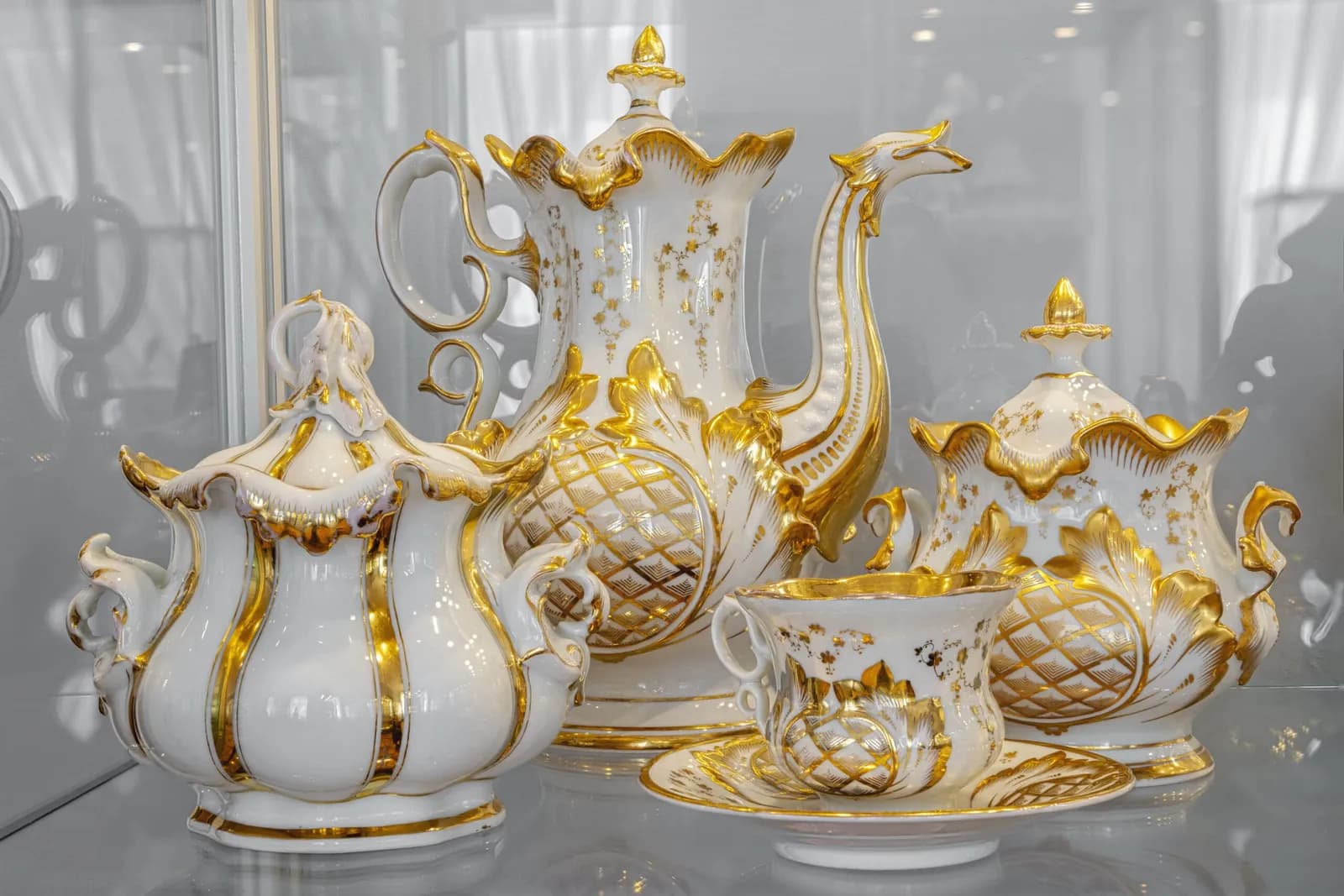
The Porcelain Museum in Wałbrzych, housed at 9 1 Maja Street, has developed from a local history collection into an institution whose holdings encompass more than 35,000 artefacts. Around 15,000 are porcelain and ceramics, while the wider collection also includes paintings, historic furniture and decorative arts.
That breadth matters because porcelain is closely connected with Wałbrzych’s own history. The city became an important centre of porcelain production, and the museum’s ceramic collection includes work associated with major nineteenth-century Wałbrzych manufacturers including Carl Franz Krister, Carl Robert Tielsch, Hermann Ohme and Franz Prause.
A museum shaped by a changing city
The institution predates its identity as a porcelain museum. Founded in 1908 through the activities of the Society of Antiquities of the Wałbrzych Region, established at the initiative of Julius Joppich, it originally served as a place for exploring local history. Its first name, Altertumsmuseum für das Waldenburger Gebirgsland, reflected the regional character of the collection.
In 1926, the museum became the Heimatmuseum in Waldenburg, or Regional Museum in Wałbrzych, and moved into the Alberti Palace at 1 Maja 9. The building remains central to the museum today, giving the collections an architectural setting that is itself part of the city’s heritage.
The museum survived the upheavals of the twentieth century. Following the Second World War, its collections were secured by local authorities and the institution reopened to visitors in 1947. Two years later it became a state institution known as the Wałbrzych Museum. In 1975, it was given the status of a District Museum, extending its activities across the then Wałbrzych Voivodeship.
Its history therefore mirrors some of the wider changes experienced by Lower Silesia. The museum has had to preserve continuity while adapting to new political, administrative and cultural circumstances.
Porcelain becomes a portrait of Wałbrzych
A major transformation came in 2015, when the museum underwent renovation and rethought how its collections were presented. Rather than isolating porcelain as a specialist subject, the displays brought it together with painting, furniture and decorative arts, creating the atmosphere of a former bourgeois residence.
The result places individual objects within a wider visual and social context. A cup, service or figurine can be appreciated for its design, craftsmanship and material qualities, but it can also be considered as part of the everyday culture that surrounded its makers and owners.
The museum’s collection demonstrates this range. Among its selected objects are pieces from Wałbrzych factories, including Krister and Tielsch, alongside European ceramics and works of art by artists including Jerzy Nowosielski, Konrad Jarodzki, Alfred Lenica and Jerzy Duda-Gracz.
This combination is particularly relevant to understanding Wałbrzych. The city’s porcelain heritage is not presented as something detached from its cultural life. Instead, ceramics sit alongside other forms of artistic expression, helping to show how industry, design, domestic life and fine art have intersected over time.
The museum’s role has consequently expanded beyond preserving objects. Its collections provide material evidence of a place whose identity has repeatedly evolved, while its educational activities offer younger visitors an opportunity to encounter that history through art and objects. The museum also operates the Centre for Unique Ceramics at Stara Kopalnia, extending its work into contemporary ceramic practice.
For visitors from elsewhere in Poland and from abroad, this makes the museum a useful introduction to Wałbrzych itself. The porcelain is distinctive, but the larger story is the relationship between a city and the things it produces, collects and chooses to preserve.
In that sense, the museum’s most interesting objects are not simply beautiful examples of porcelain. They are fragments of a much larger story about work, taste, craftsmanship and belonging. In Wałbrzych, history is not confined to dates on a timeline. It can be held in the hand, displayed in a room and read through the details of an object made generations ago.
Visitor Information
Porcelain Museum in Wałbrzych
ul. 1 Maja 9, Wałbrzych
Opening hours, May–September:
Monday: 12:00–16:00
Tuesday–Sunday: 10:00–18:00
Opening hours, October–April:
Monday: 12:00–16:00
Tuesday–Sunday: 10:00–16:00
The museum states that entry to the exhibition takes place every 30 minutes, with groups of up to 20 people. Average visiting time is approximately 45–55 minutes.
Admission:
Regular ticket: PLN 35
Reduced ticket: PLN 27